
In the vast landscape of manufacturing and industry, ensuring the quality of products is paramount. One crucial aspect of maintaining this quality is Measurement System Analysis (MSA). This process, akin to a skilled craftsman honing their tools, allows us to gauge the reliability and accuracy of our measurement systems. In this article, we’ll embark on a journey through the world of MSA, exploring its significance in quality control and process improvement, using a language that an eighth-grader can easily grasp.
Unveiling the Significance of MSA
Why Measure?
Measurement is like the compass guiding a ship through turbulent seas. In manufacturing, accurate measurements are the bedrock of quality control. Imagine building a house without precise measurements; chaos would reign, and the structure would crumble. Similarly, in industries, without accurate measurements, products could be flawed, leading to dissatisfaction and potential hazards.
The Butterfly Effect of Inaccurate Measurements
Think of a small pebble thrown into a pond. The ripples it creates expand far beyond the initial impact. In manufacturing, a seemingly insignificant measurement error can have a cascading effect on the final product. MSA helps us identify and rectify these errors before they morph into major issues.
The Dance of Precision and Accuracy
Understanding Precision
Precision is like hitting the bullseye repeatedly, even if it’s not exactly in the center. In the world of measurements, it’s about consistency. If a measurement tool consistently gives similar results, it is deemed precise. Picture a skilled archer hitting close to the target each time, showcasing precision.
The Accuracy Tightrope
Accuracy is hitting the bullseye dead center. It’s about how close the measured value is to the true value. An accurate measurement is akin to the archer consistently hitting the dead center of the target. In manufacturing, both precision and accuracy are crucial, and MSA helps us find the delicate balance between the two.
MSA Unveiled: Peeling Back the Layers
Repeatability and Reproducibility
MSA has two key players: repeatability and reproducibility. Repeatability is like taking a photo with the same camera settings multiple times – the images should be nearly identical. Reproducibility, on the other hand, is akin to using different cameras to take the same photo, expecting similar results. Both are essential for a robust measurement system.
The Gage R&R Study
Picture a relay race. The baton must smoothly pass from one runner to the next for the team to succeed. Similarly, in a manufacturing process, the transfer of information from one measurement device (or person) to another must be seamless. The Gage R&R (Repeatability and Reproducibility) study in MSA is like refining the relay process to ensure the baton is passed without a hitch.
Rooting Out Measurement Errors
Systematic vs. Random Errors
Imagine drawing a target on a windy day – the arrows may scatter randomly around the bullseye due to the wind. This is akin to random errors in measurements. On the other hand, systematic errors are like consistently aiming slightly off-center due to a flaw in the bow. MSA helps us identify and address both types of errors, ensuring our measurements are as accurate as possible.
Bias and Linearity
Bias is the consistent deviation from the true value, like consistently aiming left or right. Linearity is about maintaining a straight path – if a measuring instrument is consistently off by a certain amount across a range, it lacks linearity. MSA allows us to understand and correct bias and linearity, ensuring our measurements stay on target.
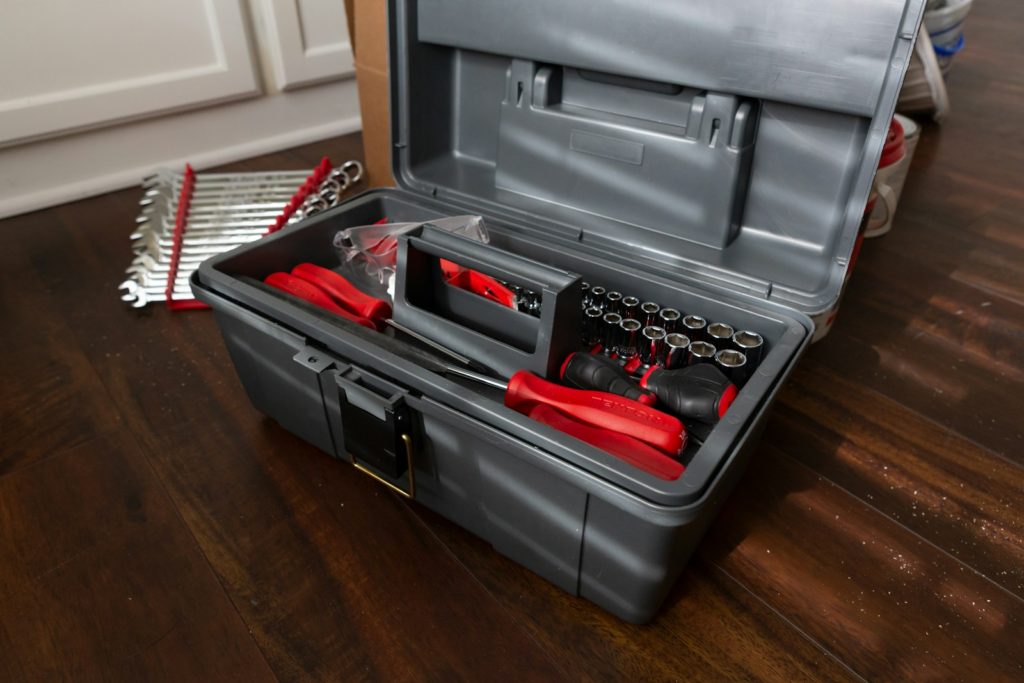
The MSA Toolbox: Tools for Precision Craftsmanship
Control Charts
Control charts are like the heartbeat monitor in a hospital room. They help us monitor the stability and consistency of a process over time. Using control charts in MSA allows us to identify patterns and variations, ensuring our measurements remain reliable.
Histograms
Imagine sorting candies by color – a histogram helps us visualize the distribution. In MSA, histograms aid in understanding the spread of measurements and identifying any irregularities. It’s like creating a visual map of the data, making it easier for us to spot trends and potential issues.
Pareto Analysis
Pareto analysis is like sorting a messy room by addressing the most significant issues first. In MSA, it helps us prioritize problems by focusing on the vital few rather than the trivial many. This targeted approach allows for efficient process improvement, streamlining our efforts for maximum impact.
The Journey Continues: Continuous Improvement
Plan-Do-Study-Act (PDSA) Cycle
Embarking on a journey often requires planning, action, reflection, and adjustment. The PDSA cycle in MSA is no different. It’s a continuous loop of planning a change, implementing it, studying the results, and acting accordingly. This iterative process ensures that our measurement systems are in a perpetual state of improvement.
Six Sigma and MSA: A Dynamic Duo
Picture a dynamic duo in a superhero movie – Six Sigma and MSA play similar roles in the world of quality control. Six Sigma provides the methodology for process improvement, while MSA ensures the accuracy of measurements within that methodology. Together, they create a powerful force for enhancing product quality.
The Art and Science of MSA
MSA in Everyday Life
To demystify MSA further, let’s look at everyday scenarios. Imagine baking cookies – precise measurements of ingredients ensure the perfect batch. MSA is like fine-tuning your measuring cups and spoons to guarantee each cookie is consistently delicious. In the grand tapestry of manufacturing, MSA is the brush that paints the strokes of accuracy and precision.
The Human Element
In any craft, the human touch is irreplaceable. Similarly, in MSA, the human element is crucial. Whether it’s an operator using a measuring device or an engineer interpreting data, human understanding and skill play a pivotal role. MSA is not just about machines and numbers; it’s about people working together to create excellence.
Conclusion: Nurturing a Culture of Quality
In the vast landscape of manufacturing and industry, where the wheels of progress never cease turning, Measurement System Analysis stands as a silent guardian, ensuring the accuracy and precision of our measurements. It’s a journey of continuous improvement, a dance between precision and accuracy, and an art that requires both tools and human touch. As we embrace MSA, we not only enhance the quality of our products but also nurture a culture where excellence is not just a goal but a way of life.